

The Steve Jobs Approach to Innovation: Why You Can’t Just Ask Customers What They Want

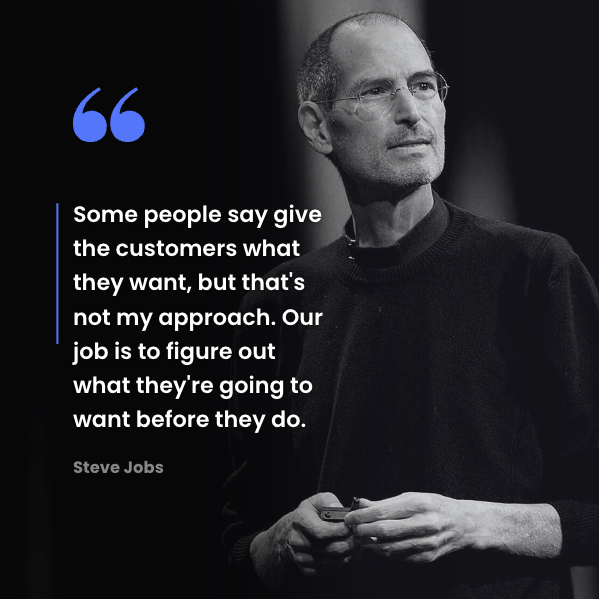
When it comes to innovation, few names stand out as brightly as Steve Jobs. His approach to product development and design has left an indelible mark on the tech world and beyond. Jobs was known for his bold, visionary philosophy that often ran counter to conventional wisdom. While many companies relied heavily on customer feedback, Jobs believed that it was the responsibility of innovators to predict what people would want in the future, rather than simply asking them for feedback on existing needs. This approach not only defined Apple’s success but also reshaped how we think about creativity and progress.
“People Don’t Know What They Want Until You Show It to Them”
One of Jobs’ most iconic beliefs is captured in this quote: “It’s really hard to design products by focus groups. A lot of times, people don’t know what they want until you show it to them.” This statement encapsulates the core of his philosophy. Jobs believed that if Apple had relied solely on customer feedback or market research, they would have missed out on the opportunity to truly innovate.
This approach can be traced through Apple’s most successful products. When the iPhone was first released in 2007, there was no overwhelming demand for a smartphone with a touchscreen interface, no physical keyboard, or an integrated app store. In fact, many experts at the time doubted its potential. Yet, Jobs and his team saw a future where people would want a device that combined a phone, an iPod, and an internet communicator into one seamless experience. The result? A product that revolutionized the mobile industry and redefined the expectations for smartphones worldwide.
Anticipating Future Desires
Jobs’ ability to predict future consumer desires was not a product of mere luck or chance. It was built on his understanding of technology, design, and human behavior. He believed that to create truly groundbreaking products, you had to go beyond what customers were currently asking for and envision how they would use technology in new ways. This required a deep understanding of both the product and the people who would use it.
The original iMac, for example, with its brightly colored, translucent design, was introduced at a time when personal computers were predominantly beige boxes. Jobs and Apple saw an opportunity to not only make technology more functional but also more aesthetically pleasing. They didn’t ask consumers if they wanted colorful computers—they showed them how technology could fit into their lives in a more personal, human way. And once people saw it, they wanted it.
Why Focus Groups Aren’t Always the Answer
Many companies rely heavily on focus groups and customer surveys to guide product development. While these methods can be useful for incremental improvements, they are often limited when it comes to true innovation. Jobs saw focus groups as reactive—good for refining ideas, but not for generating them.
The main issue with focus groups is that customers can only express their desires based on what they already know. As Henry Ford famously said, "If I had asked people what they wanted, they would have said faster horses." Like Ford, Jobs understood that the future of innovation lies in creating entirely new experiences, not simply improving on old ones.
In Jobs’ view, the role of an innovator is to push beyond the limitations of current expectations and to create something that surprises and delights customers. Apple’s products didn’t just meet existing demands; they created new ones. The iPod didn’t just give people a better way to listen to music; it fundamentally changed the way they interacted with and purchased music.
The Intersection of Technology and Liberal Arts
A key aspect of Jobs’ success was his ability to blend technology with liberal arts. He believed that the most successful products are not just technically advanced but also emotionally resonant. His approach to product design wasn’t just about functionality—it was about how the product would make people feel.
The sleek, intuitive design of Apple products like the MacBook, iPhone, and iPad wasn’t just a marketing gimmick. It was part of a broader philosophy that technology should be accessible, easy to use, and even enjoyable. This focus on the intersection of technology and human experience allowed Apple to set itself apart from competitors who focused purely on technical specifications or market demands.
Jobs frequently cited his experience studying calligraphy in college as a formative influence on his design philosophy. He cared deeply about how things looked and worked. He believed that details, no matter how small, could make or break a product's success. This obsession with perfection and user experience is why Apple’s products continue to enjoy a loyal following even years after Jobs’ passing.
The Risks of Jobs’ Approach
Jobs’ philosophy was not without risks. Innovating in the way that he did required tremendous confidence, conviction, and an unwavering belief in his vision. Not every product Apple developed was a hit—the Newton, a personal digital assistant released in the late 1990s, is a prime example of a failure. However, Jobs understood that failure is a part of the innovation process. He embraced risk, knowing that without it, true breakthroughs were impossible.
Moreover, Jobs wasn’t always easy to work with. His perfectionism and demanding nature often led to tensions within the company. But his vision and relentless pursuit of excellence pushed Apple to the forefront of technological innovation.
Jobs’ Legacy: Leading by Vision, Not by Demand
Steve Jobs’ approach to innovation has left a lasting legacy, not just for Apple but for the broader tech industry. His belief in leading by vision rather than by demand is still echoed by many companies today. Rather than relying solely on customer feedback, successful businesses often combine data with creative insight to anticipate future trends.
In today’s fast-paced world, where technology continues to evolve at breakneck speed, Jobs’ emphasis on vision, design, and user experience remains more relevant than ever. Companies that focus solely on delivering what customers are asking for may find themselves left behind by those who dare to think ahead.
For innovators, the lesson from Steve Jobs is clear: don’t just ask what your customers want—show them what they never knew they needed.







Comments
Sign in to join the conversation.
No comments yet.