

Ford CEO Jim Farley’s Surprising Choice: Why He Drives a Xiaomi Electric Vehicle

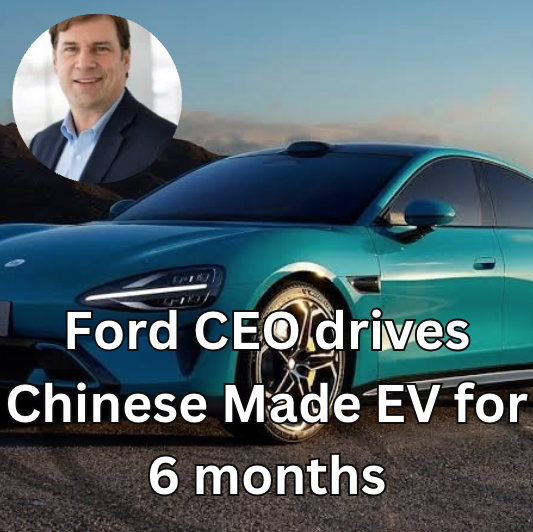
In a move that has caught the attention of both the automotive and tech worlds, Ford Motor Company CEO Jim Farley recently revealed that his personal vehicle isn’t from Ford’s lineup, but rather a Xiaomi SU7—a Chinese-made electric vehicle (EV) from the consumer electronics giant Xiaomi. This decision, disclosed on the Everything Electric Show podcast, has sparked conversations about Ford’s strategy in the increasingly competitive EV market and highlights the impact of global EV players on American automakers.
Why Is the CEO of Ford Driving a Xiaomi EV?
For the past six months, Farley has been driving the Xiaomi SU7, imported from Shanghai to his base in Chicago. While it may seem surprising for the CEO of an iconic American car brand to choose a Chinese EV, Farley’s decision may actually reveal some key insights into Ford’s approach to innovation and competition in the global EV market.
Farley’s choice signals his acknowledgment of China’s rapid advancement in EV technology. Xiaomi, known primarily for its smartphones and consumer electronics, entered the EV market with significant resources, and its debut models have been met with strong domestic success. By choosing a Xiaomi EV, Farley is experiencing firsthand the strengths, features, and innovations of a vehicle designed for one of the most competitive EV markets in the world. This firsthand exposure could offer him valuable insights into what Ford needs to prioritize to stay competitive globally.
What Makes the Xiaomi SU7 Stand Out?
The Xiaomi SU7, Farley’s vehicle of choice, showcases some of the latest advances in EV technology, from user-friendly digital interfaces to high-capacity batteries with extended range. Xiaomi, as a tech company, has integrated advanced features that appeal to the digitally savvy consumer, including enhanced in-car connectivity, over-the-air updates, and smart features akin to what one would find on a high-end smartphone.
Xiaomi’s success in the Chinese EV market reflects China’s broader influence in electric vehicles, where companies like BYD, NIO, and XPeng are pushing the boundaries of design, range, and affordability. These vehicles often come with high-tech infotainment systems and efficient battery solutions at competitive prices, making them a growing threat to traditional automakers in the global market. By driving the Xiaomi SU7, Farley may be immersing himself in the customer experience that is reshaping the EV market and drawing lessons to bring back to Ford.
Learning from Global Competitors: How This Could Impact Ford’s EV Strategy
Farley’s choice to drive a Xiaomi EV could influence Ford’s design and production strategies as the company ramps up its electric lineup. Ford has already made significant investments in its EV division, with models like the Mustang Mach-E and the F-150 Lightning marking its commitment to an electric future. However, by observing a competitor’s approach, Farley can explore additional innovations Ford might integrate to appeal to a broader, more tech-driven audience.
China’s EV makers have pioneered cost-effective manufacturing techniques, advanced battery technology, and user-friendly interfaces that Western automakers, including Ford, are watching closely. As Ford navigates its global EV ambitions, particularly in China and Europe, Farley’s experience with the Xiaomi SU7 could inspire adjustments in Ford’s approach to software integration, in-car technology, and even pricing strategy.
Could This Decision Impact Ford’s Brand Image?
For some Ford loyalists, it might seem contradictory or even controversial that their CEO would drive a competitor’s vehicle—especially one manufactured abroad. Ford is, after all, a deeply American brand, known for its legacy in making vehicles that resonate with American values and culture. The F-150, for example, is often considered an emblem of American manufacturing, and Ford’s recent push for EV production in the U.S. aims to align with these ideals.
However, Farley’s choice could be interpreted as a bold, forward-thinking decision that emphasizes Ford’s commitment to understanding and staying competitive in the rapidly evolving EV landscape. By immersing himself in a competitor’s product, Farley demonstrates a willingness to learn, adapt, and bring the best of what he experiences to Ford. In a sense, it’s an acknowledgment that innovation is global—and to stay relevant, Ford must keep pace with, if not surpass, the advancements coming out of international markets.
The Bigger Picture: How Xiaomi’s Entry Reflects the Future of EVs
Xiaomi’s entry into the EV market is symbolic of a larger trend in which tech companies are crossing into automotive spaces. Apple has long been rumored to be working on an electric vehicle, and companies like Sony have revealed concept cars as they test the waters of the EV market. With a foundation in consumer electronics, these companies bring a software-first approach, which has become essential in a connected, data-driven world.
For Ford, competing with tech-driven companies like Xiaomi means doubling down on software and connectivity. Recent partnerships with tech firms and investments in battery production are a step in that direction, but it’s clear that Ford must continue adapting to compete with the seamless digital integration that tech companies bring to EVs.
Conclusion: A Strategic, Forward-Looking Choice
Jim Farley’s decision to drive a Xiaomi EV may initially appear unusual, but it’s a strategic move for a CEO intent on positioning Ford as a global leader in electric vehicles. By choosing to drive a Chinese-made EV, Farley is immersing himself in the latest global EV innovations and better understanding the consumer experience offered by international competitors. In the long run, this hands-on research could help Ford stay competitive in a market increasingly driven by technology, connectivity, and consumer-centric features.
As Ford continues its push into the electric future, Farley’s experience with the Xiaomi SU7 might just provide the insights Ford needs to drive innovation and secure its place in a fast-evolving automotive world.







Comments
Sign in to join the conversation.
No comments yet.